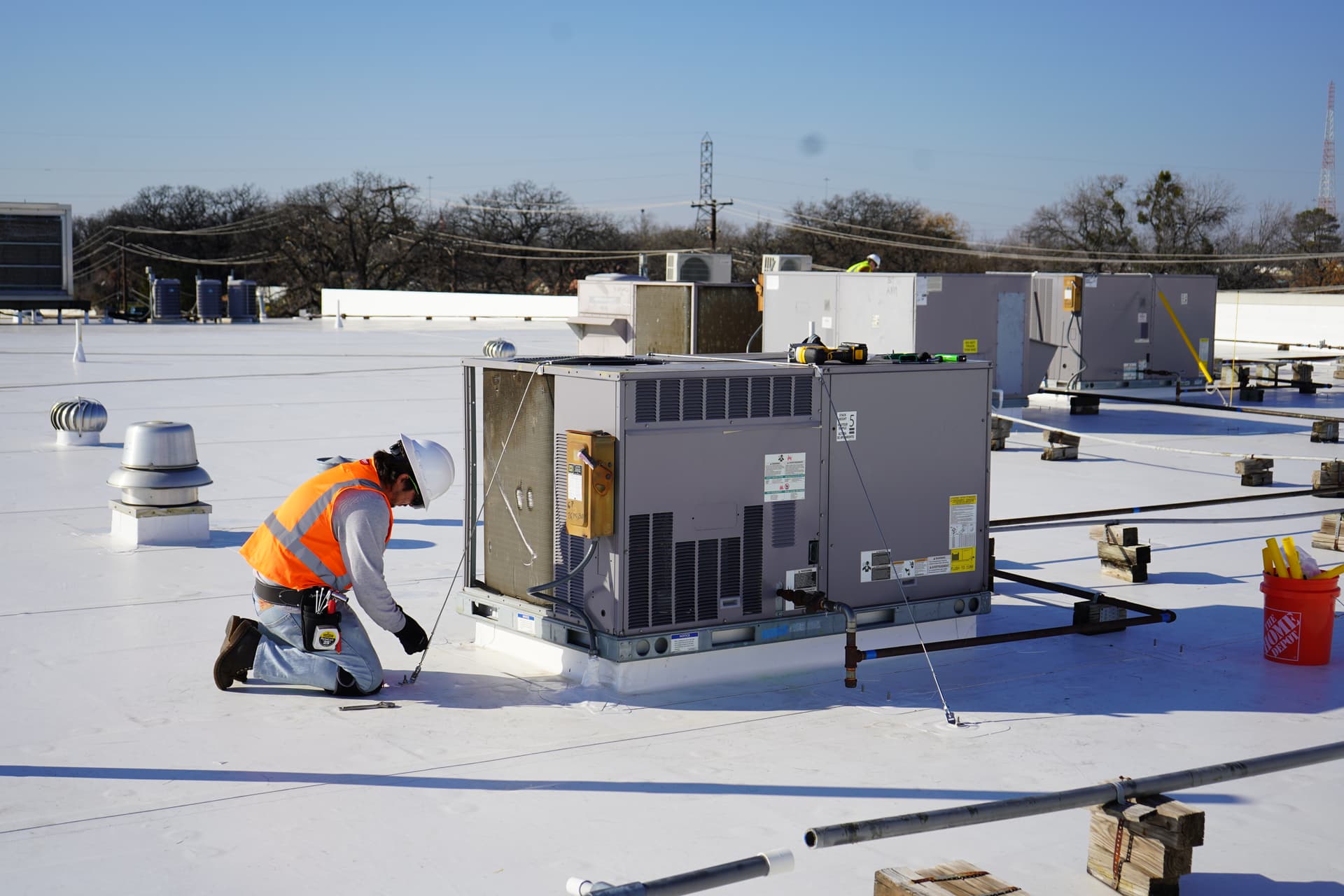
Duct Securement
Duct is the awkward load on a roof. It's bulky, light for its size, and a sail in high wind. Set it on blocks or sleepers and it traps water, interrupts drainage, and wears into the membrane underneath. Duct Securement carries the run on stainless aircraft cable tensioned between U-Anchor® bases, holding the duct clear of the roof surface. The U-Anchor® is a component of the roof, not something sitting on top of it.

Drag to turn it
A duct run carried clear of the roof surface, secured to 3000 Series U-Anchors.
How it works
It starts with a U-Anchor®, a component of the roof, sealed watertight at the point of attachment. Everything else connects your equipment to that one point.

The part that carries the load. A galvanized steel plate with rolled edges that protect the membrane sits under a cover membrane matched to the roofing brand, type, and color, leaving a stainless stud at the surface for everything else to bolt to. Which one you use is decided by the membrane on the building, not by the equipment.
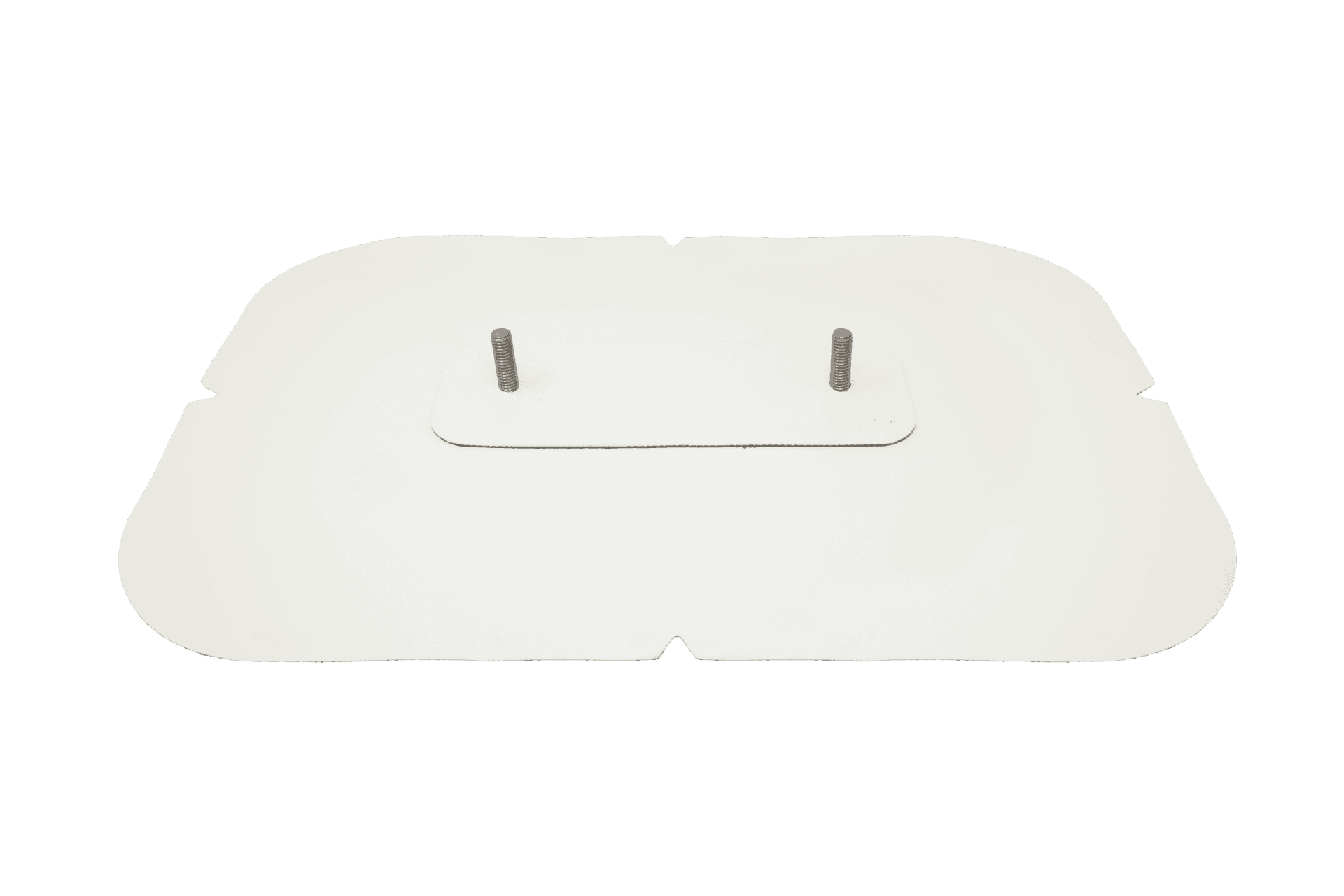
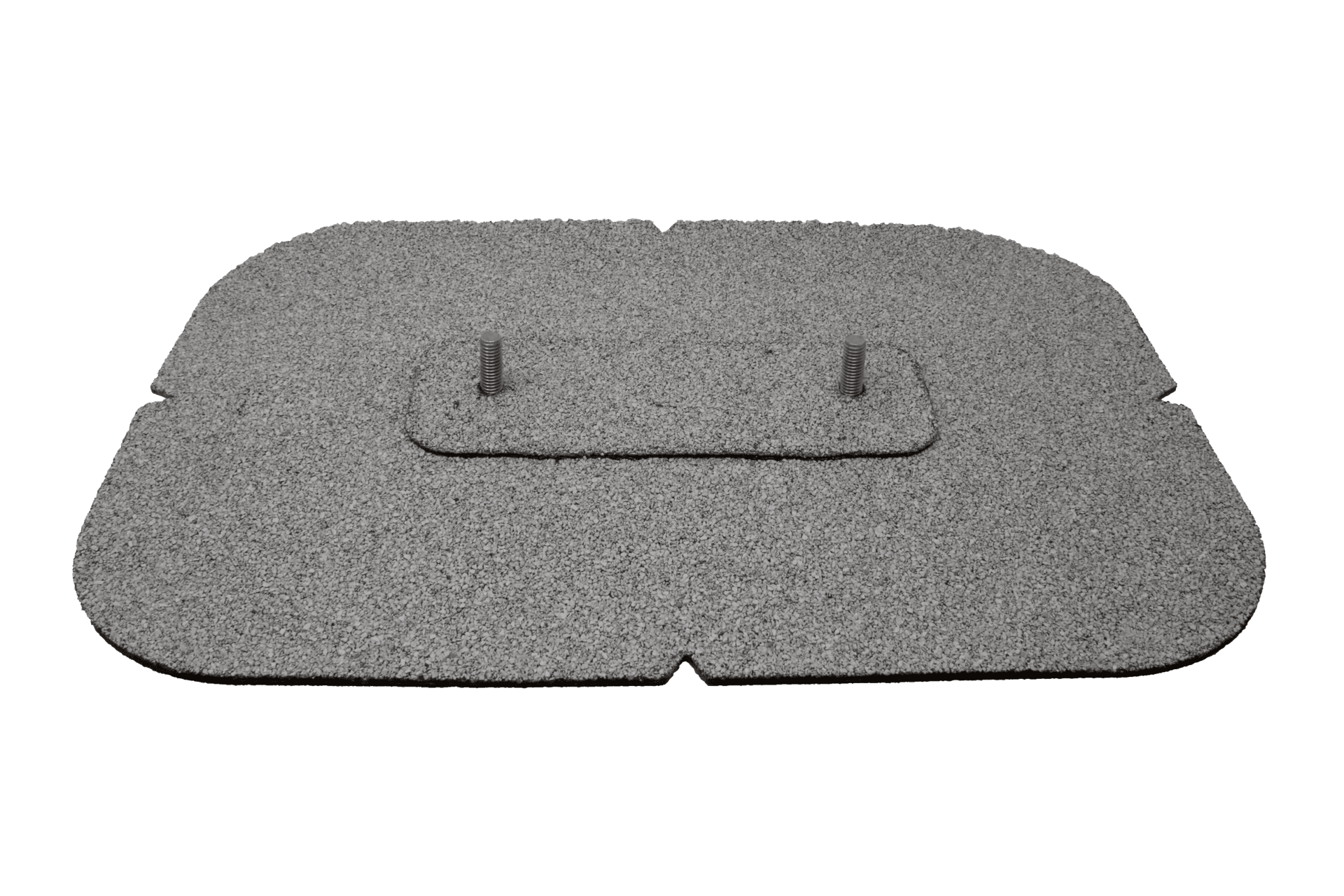
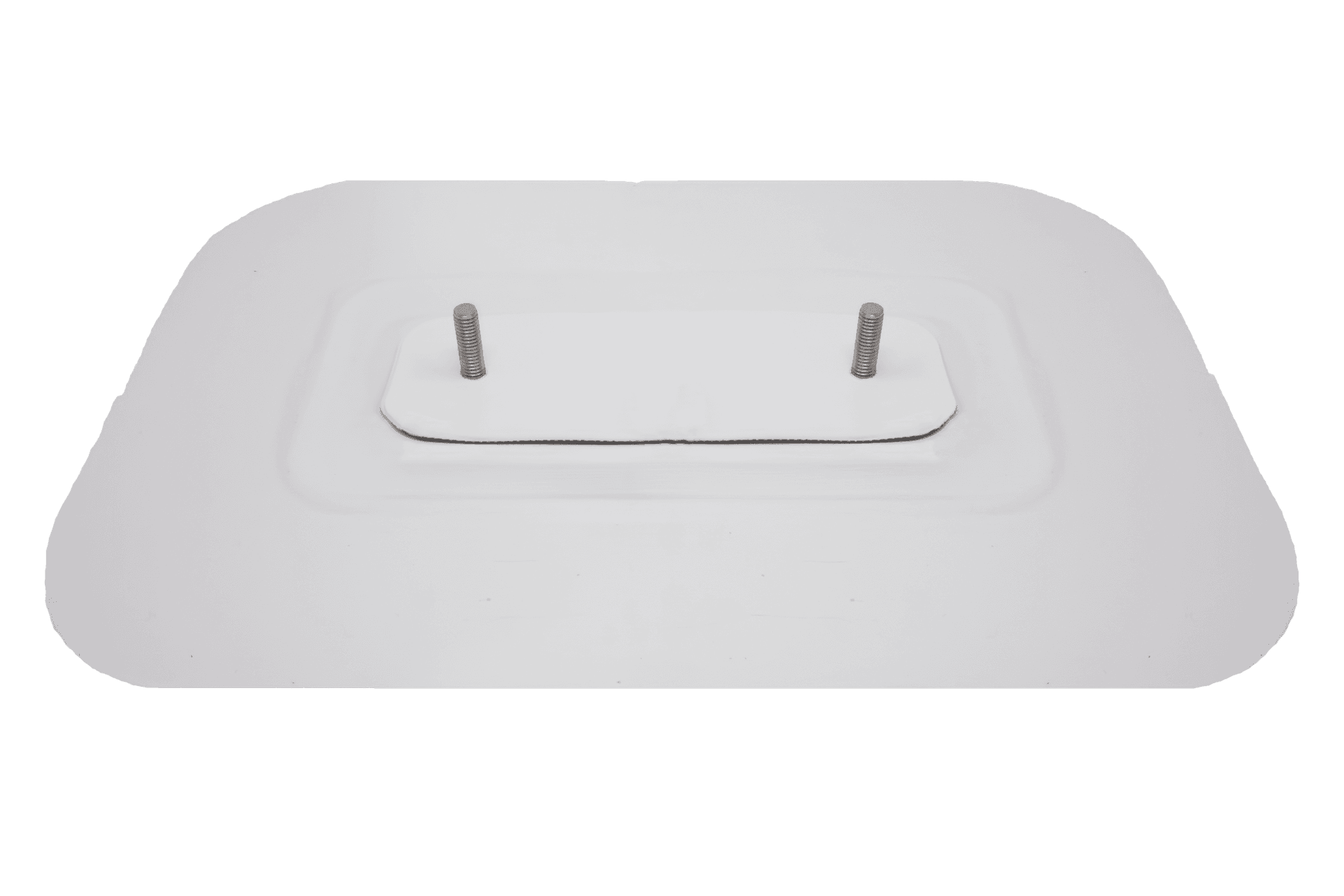
What connects your equipment to that stud. Supplied with the solution, and sold on its own where a job needs more of them.

Strut header beam, Strut support beam, Shoulder bracket frame, Existing duct and frame (by others), Securement cables — fitted to the equipment itself rather than to the roof.

The part that carries the load. A galvanized steel plate with rolled edges that protect the membrane sits under a cover membrane matched to the roofing brand, type, and color, leaving a stainless stud at the surface for everything else to bolt to. Which one you use is decided by the membrane on the building, not by the equipment.
What connects your equipment to that stud. Supplied with the solution, and sold on its own where a job needs more of them.
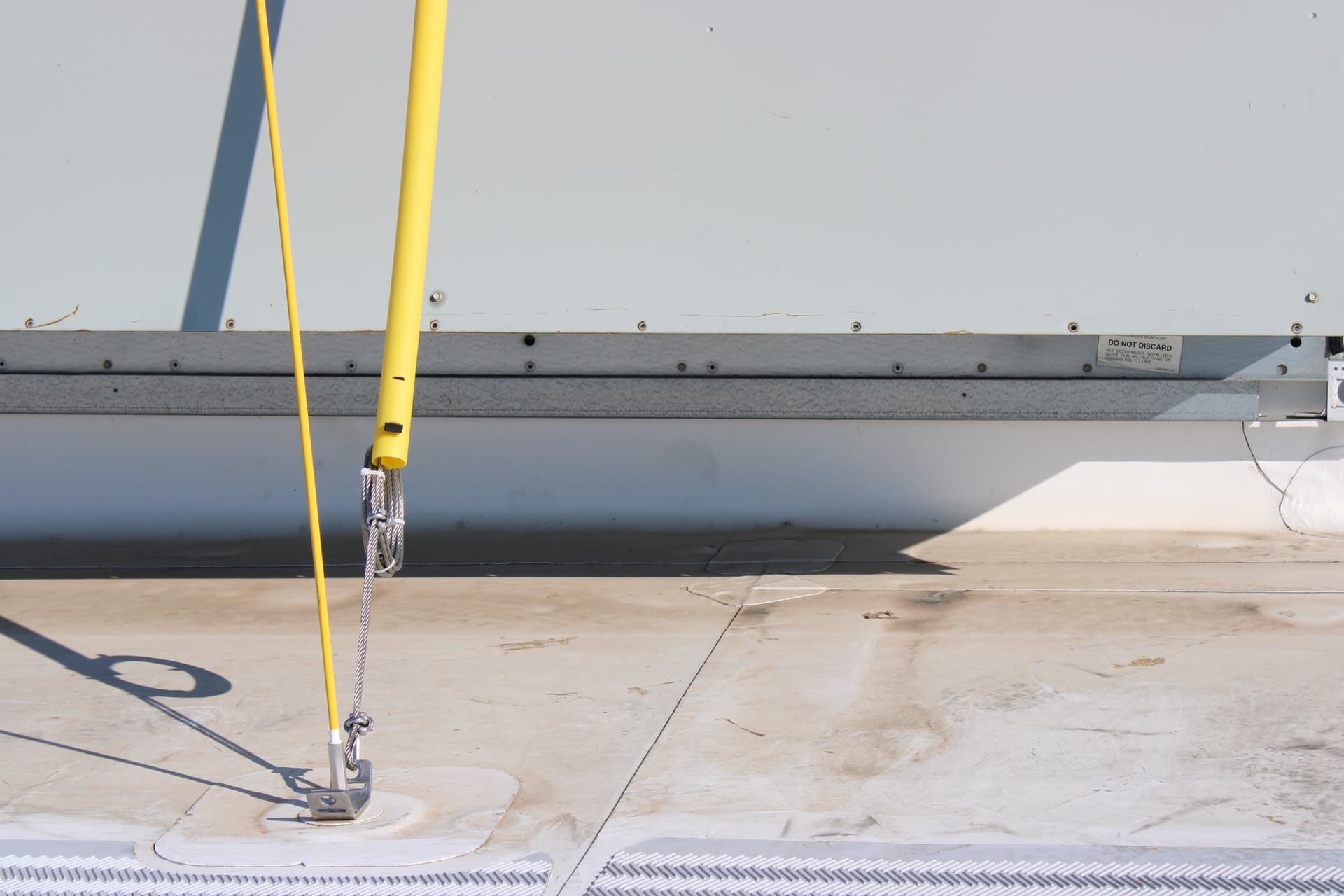
Existing duct and frame (by others), Securement cables — fitted to the equipment itself rather than to the roof.

The part that carries the load. A galvanized steel plate with rolled edges that protect the membrane sits under a cover membrane matched to the roofing brand, type, and color, leaving a stainless stud at the surface for everything else to bolt to. Which one you use is decided by the membrane on the building, not by the equipment.
What connects your equipment to that stud. Supplied with the solution, and sold on its own where a job needs more of them.
Existing duct and frame (by others), Securement cables — fitted to the equipment itself rather than to the roof.