
Why a Single Roof Leak Can Break a Decades-Old Supply Chain
The Biological Lockstep of Industrial Operations
For decades, a massive pig processing plant in West Texas has operated with relentless precision, slaughtering 16,000 pigs every single day. This volume represents more than just a high-capacity manufacturing metric. It is the final step in a highly synchronized biological and logistical sequence that leaves zero margin for error.
To sustain this daily output, exactly 16,000 pigs must be born each day, and another 16,000 must be moved systematically from lot to lot. The entire operation functions in a continuous, zero-buffer flow. If one part of the chain falters, the disruption cascades backward through the entire system, stalling agricultural logistics across the region.
The Myth of "Catching Up" After a Shutdown
The vulnerability of this massive operation often lies not in the machinery of the processing floor, but on the roof directly above it. If a leak occurs over the active processing line, facility managers have no choice but to shut the line down immediately to maintain food safety and sanitation standards.
While standard manufacturing facilities might attempt to offset a lost day with overtime or double shifts, biological supply chains do not allow for such flexibility. A facility operating at maximum capacity cannot simply double its throughput to make up for unplanned downtime.
As Joel Stanley, founder of Anchor Products, points out, the math of industrial processing is unforgiving when operations stop unexpectedly. A single structural failure can instantly disrupt a highly coordinated supply chain.
"If you miss out on killing 16,000 pigs today, you can't make it up and kill 32,000 pigs tomorrow. You lost all this production." — Joel Stanley, Founder of Anchor Products
To prevent such losses, any downtime must be planned months in advance, allowing operators to adjust breeding cycles and halt the incoming pipeline of livestock. Unplanned downtime, even for a few hours, creates an immediate backlog that the facility physically cannot resolve.
Rethinking the Roof as Operational Insurance
Industrial operators and commercial real estate developers frequently treat roofing as a passive structural element rather than active business infrastructure. However, when a simple leak can halt an entire supply chain, the security of the roof becomes a matter of operational resilience.
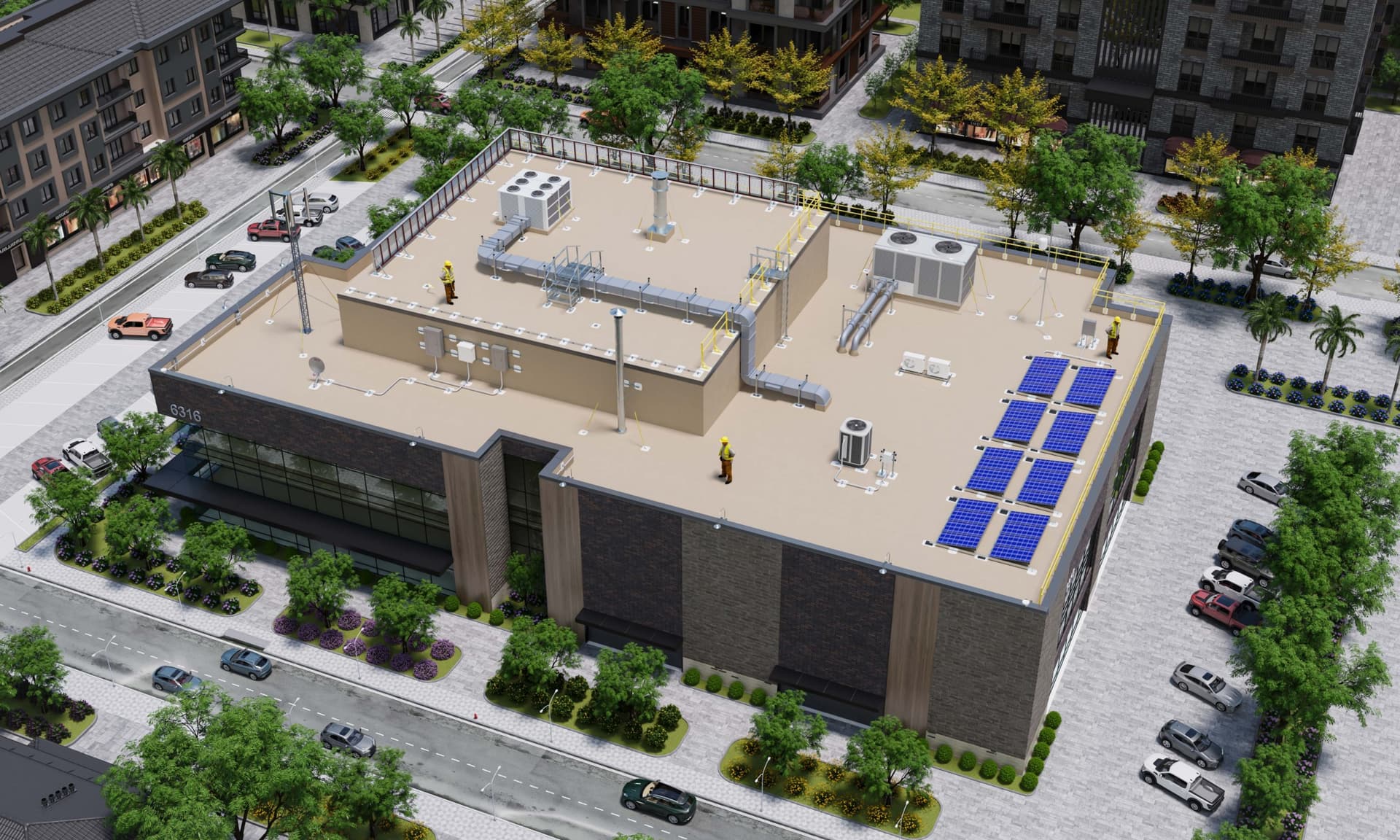
Essential facilities must keep critical equipment on their roofs, ranging from heavy HVAC systems to electrical housings, and these units must remain firmly secured. During extreme weather events such as hurricanes, tornadoes, and earthquakes, unsecured rooftop equipment can shift, tearing the underlying membrane and creating catastrophic pathways for water.
To mitigate this risk, operators are increasingly turning to advanced roof anchoring technologies. Systems like the U-Anchor, manufactured by Anchor Products, are designed to secure heavy mechanical, electrical, and plumbing equipment directly to the roof structure without compromising the integrity of the water barrier. By anchoring these units securely, facilities can maintain a redundant, strong roof system that prevents the leaks that trigger line shutdowns.
Securing the Bottom Line from the Top Down
Ultimately, protecting an industrial facility from unplanned shutdowns requires looking beyond the factory floor. Operational resilience begins at the building envelope, where a single structural vulnerability can cause millions of dollars in unrecoverable losses.
By investing in robust, certified rooftop anchoring systems, facility owners and operations managers protect more than just physical assets. They safeguard the continuous flow of their entire supply chain, ensuring that a localized weather event does not transform into a systemic operational crisis.