
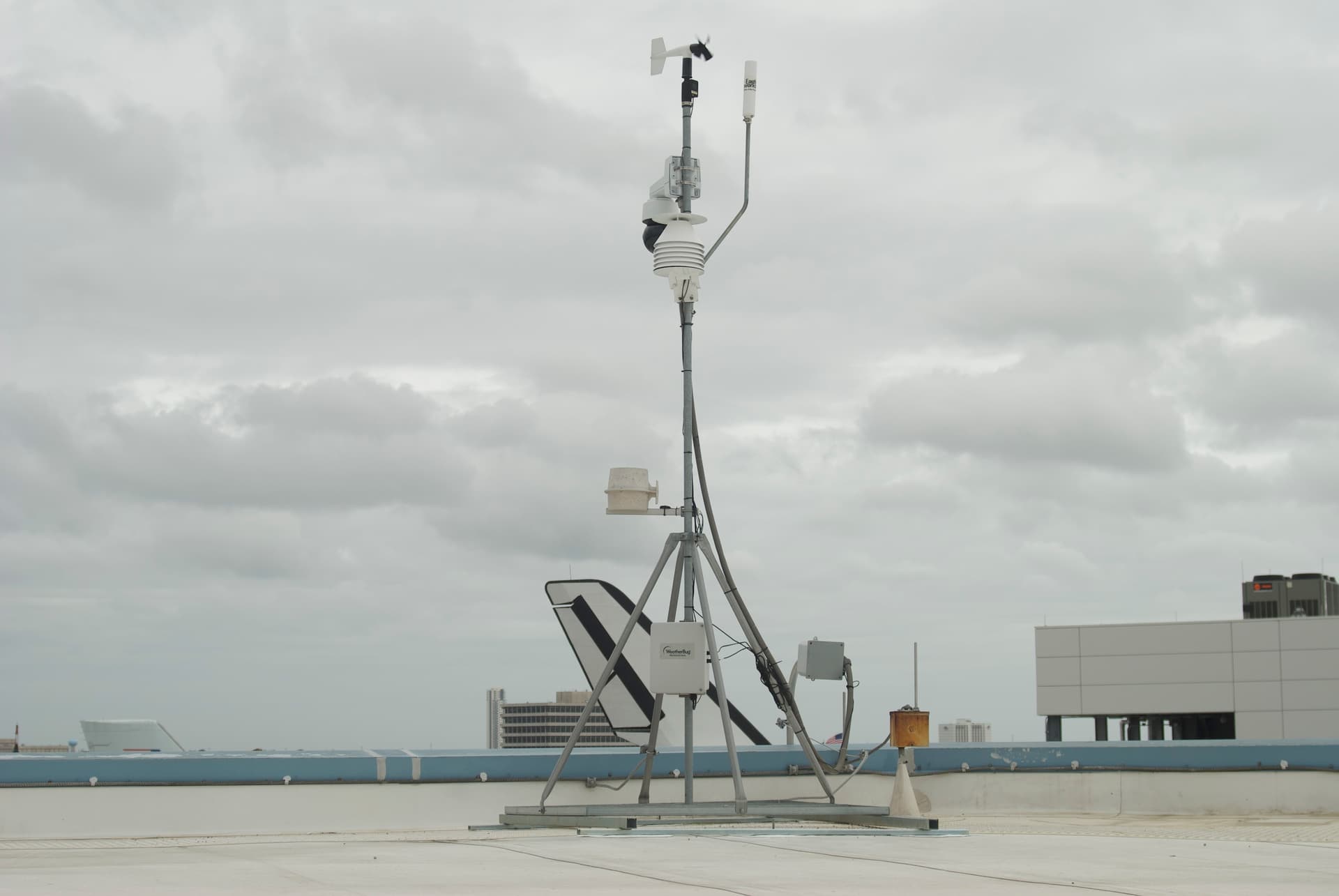
TESTED, PROVEN, Endorsed
The rooftop landscape encompasses multiple CSI divisions, and the code-required attachment between the roof and the equipment is often left to the field, where the securement gets assumed rather than calculated. Anchor Products closes that gap with stamped test reports, 3-part specs, product data sheets and pre-engineered details, with attachments specifically designed to meet your wind, seismic, and snow requirements.
- test reportS
- 3-part specs
- Pre-engineered details
- Project-specific support
WHAT GETS neglected
Common considerations for your rooftop equipment design.
The connection IS OVerlooked in design
One professional specifies the equipment, another specifies the roof, and the attachment often becomes a field decision: improvised supports and sleepers, a detail that is not the one you imagined, and long-term performance is compromised.
DEAD LOAD IS NOT THE ONLY CONSIDERATION
Typically, Dead load is the only consideration of designers. However, shear and tension loads from wind uplift & seismic loads are also required in the design.
Overburden is excluded from the warranty
Items placed above the roof are commonly considered overburden and excluded from the roof warranty. The U-Anchor® is the preferred attachment of major roof manufacturers' and is included as an accessory in their warranties.
What the code requires
The codes and standards that govern how rooftop equipment is attached, section by section.
International Building Code (IBC)
The IBC is a comprehensive, legally-enforceable, series of building codes that govern how rooftop equipment gets installed on the roof.
2024 IBC 2801.1 Scope: "The provisions of this chapter, the International Mechanical Code, and the International Fuel Gas Code shall govern the design, construction, erection, and installation of mechanical appliances, equipment, and systems used in buildings and structures…"
2024 IMC 301.15 Wind Resistance: "Mechanical equipment, appliances, and supports that are exposed to wind shall be designed and installed to resist the wind pressures determined in accordance with the International Building Code."
2024 IMC 301.18 Seismic resistance: "Where earthquake loads are applicable in accordance with the International Building Code, Mechanical system supports, anchorage, and bracing shall be designed and installed for seismic forces in accordance with Chapter 16 of the International Building Code"
2024 IBC 1613.1 Scope: "Every structure, and portion thereof, including nonstructural components that are permanently attached to the structures and their supports and attachments, shall be designed and constructed to resist the effects of earthquake motions in accordance with chapters 11, 12, 13, 15, 17, and 18 of ASCE 7, as applicable."
ASCE 7
The ASCE 7 is a technical standard published by the American Society of Civil Engineers and because the IBC references it, ASCE 7 carries the same legal weight as the rest of the building code.
ASCE 7-16 & 7-22, 13.4 Nonstructural components anchorage:
"Component attachments should be bolted, welded, or otherwise positively fastened without consideration of frictional resistance produced by the effects of gravity."
FM Global
FM Global is a private, commercial property insurance company and engineering organization. While the IBC and ASCE 7 focus on life safety, FM Global’s focus is on protection of property and can require more conservative designs, particularly for roofs, in order to be insurable.
FMDS 1-28:3.8.1; "Only FM Approved roof anchors are permitted to secure roof mounted equipment."
FMDS 1-28:2.6.1; "Use products FM Approved per Approval Standard FM4481, roof anchors, to provide resistance to the horizontal and vertical forces..."
International Institute of Ammonia Refrigeration (IIAR)
The International Institute of Ammonia Refrigeration (IIAR) is a key organization for the industrial refrigeration industry, focusing on the safe and efficient use of natural refrigerants, particularly ammonia.
ANSI/IIAR 2, Section 13.4.1; requires that "piping hangers and supports shall carry the weight of the piping and any additional expected loads." These additional loads explicitly include wind and seismic forces which would exclude the sole use of friction or gravity-based supports such as sleepers.
ANSI/IIAR 4, Section 6.1, and ANSI/IIAR 9, Section 7.2.7.1 mandates that piping must be "supported to prevent excessive vibration and movement." Unsecured sleepers or supports on a roof would fail this requirement if not used with some form of anchorage, especially under wind loads.
Approvals and listings




What we give you
Specifications & product data
3-part specs, product data and published load data for every U-Anchor® series.
Get the specsLiterature library
Solutions guides, cut sheets and reference material, organized by application.
Open the libraryThe attachment platform
2000 and 3000 Series plates, so you can size the connection to the actual demand instead of over-specifying.
Compare the seriesSolutions by application
Mechanical, electrical, plumbing, safety, access, solar, snow retention, communications, accessories, and more, with the series each one requires.
See all solutionsMechanical tie-downs
Wind and seismic securement for new and existing rooftop mechanical equipment, guyed or framed.
See mechanical solutionsA load calculation
Roof assembly, equipment, exposure category and site conditions. We come back with a series recommendation and the capacity to support it.
Request a load calculation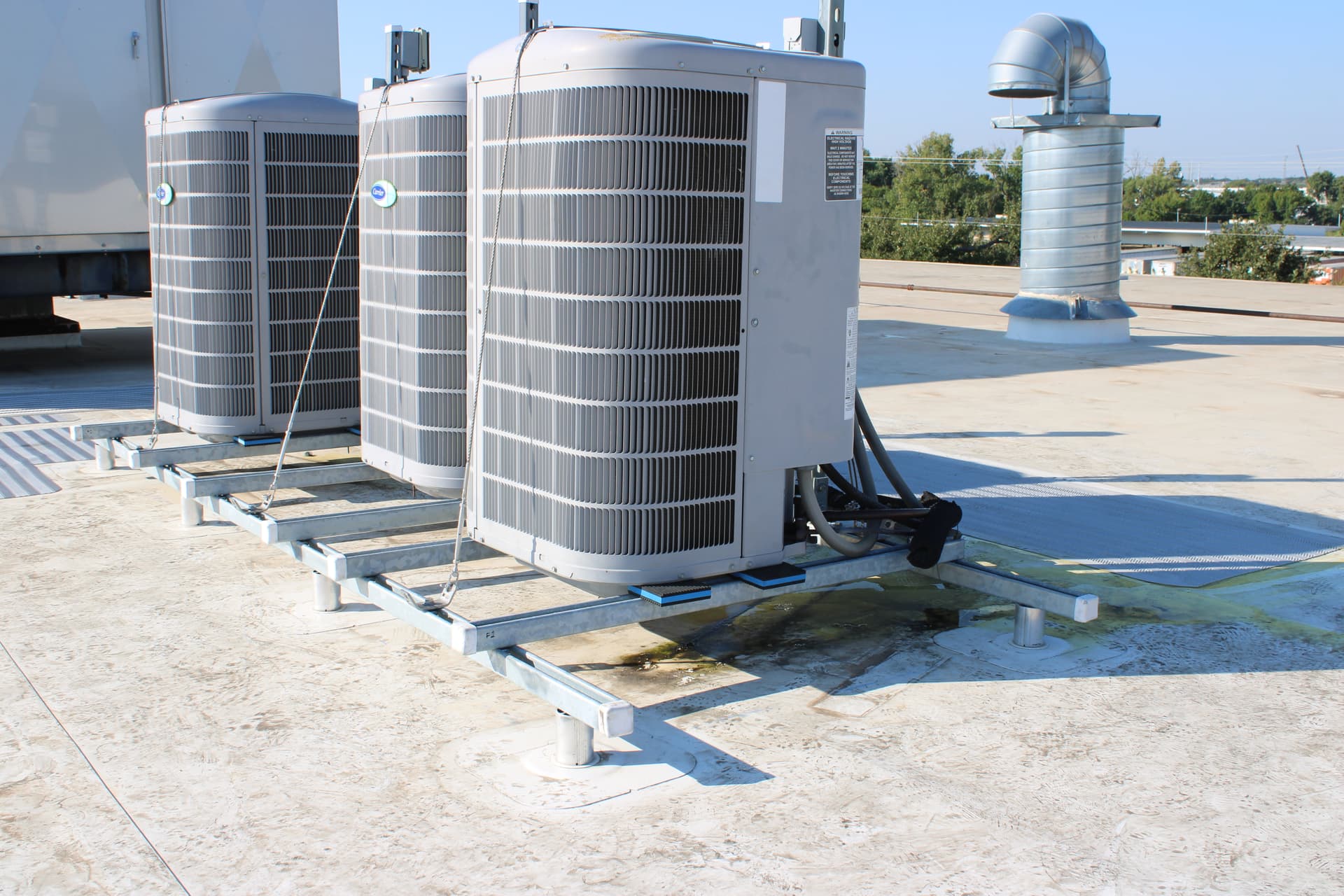
A component of the roof
The U-Anchor® is a non-exposed galvanized steel plate with rolled edges that protect the membrane. A bolt is welded to the top of the plate eliminating any possible path for leaks. A cover membrane matched to the roofs brand, type, and color is fused over the plate, topped with a separator to prevent abrasion. It is a component of the roof, not something simply sitting on top of it. Nothing requires periodic maintenance to maintain your watertight seal.