
Why Temporary Sealants and Floating Curbs Put Commercial Roofs at Risk
A single-ply adhered EPDM rubber membrane is engineered to protect a commercial building for 20 to 30 years. Yet mechanical, electrical, and plumbing (MEP) attachments frequently compromise that investment within the first few seasons.
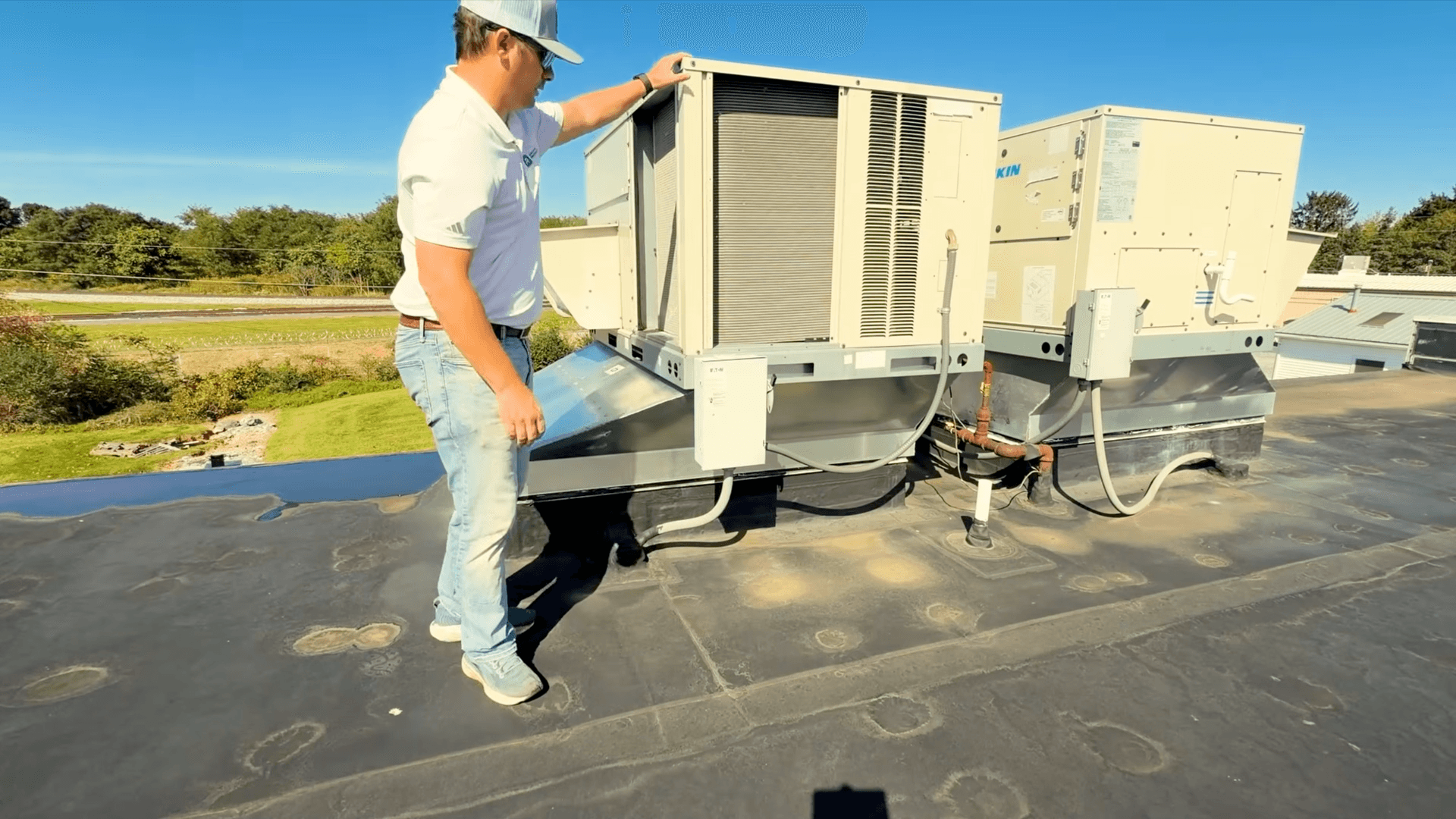
During a diagnostic walkthrough of a 10-year-old commercial EPDM roof, Brandon Reynolds, OEM Business Manager at Anchor Products, demonstrated a recurring facility maintenance conflict. While the primary roofing membrane remained in sound condition, the field-improvised attachments securing the rooftop equipment showed severe structural and waterproofing degradation.
When mechanical attachments rely on topical caulking or unanchored gravity mounts, facility managers face premature roof leaks, accelerated membrane fatigue, and severe safety liabilities.
The Lifespan Conflict: 30-Year Membranes vs. 1-Year Sealants
The primary failure point on commercial rooftops is rarely the field of the roof membrane itself. Instead, water intrusion occurs where trades make physical penetrations to mount electrical lines, conduit runs, and mechanical boxes.
A standard commercial roof membrane is formulated for decades of continuous weather exposure. In contrast, topical construction caulks and elastomeric sealants begin breaking down under ultraviolet radiation and seasonal thermal cycling in as little as 12 to 24 months.
When equipment installers secure brackets directly through a vertical or horizontal membrane using mechanical screws and a bead of caulk, they create an immediate maintenance burden. The building owner inherits a multi-decade roof that requires annual sealant re-application simply to prevent water from following screw threads straight into the roof deck and building envelope.
Perimeter Fastener Vulnerabilities and Degraded Caulking
Parapet walls often accumulate electrical disconnects, junction boxes, and conduit lines that support rooftop HVAC systems. Inspecting these perimeter details reveals how quickly improvised fastenings fail.
During the rooftop inspection, metal conduit brackets secured directly into the parapet wall showed significant sealant degradation. The thin perimeter caulking had become brittle, exhibiting visible surface fissures and micro-cracks ready to channel standing water and driving rain.
Worse, inspecting beneath an adjacent electrical disconnect switch revealed raw, uncaulked screw penetrations driven directly through the EPDM membrane. These unsealed fasteners establish a direct, unmonitored pathway for moisture intrusion behind the wall flashing, which rots underlying substrate panels and insulation long before water stains appear on interior drywall.
Unanchored HVAC Equipment and Ground-Level Safety Risks
The most alarming hazard uncovered during the diagnostic walkthrough involved rooftop HVAC unit securement. Adjacent to the roof perimeter and gutter line, commercial Daikin HVAC units were placed directly onto pre-fabricated curbs without mechanical curb fasteners.
The inspection identified an unattached Daikin HVAC curb unit on the roof.
Relying purely on unit weight to resist lateral storm forces and wind uplift creates severe life-safety exposure. Located feet from the roof edge, unfastened equipment sitting directly above active employee parking lots and pedestrian walkways can slide or tip during severe weather events, threatening building occupants and creating catastrophic property damage liabilities.
Conduit Sag, Pitch Pockets, and Mechanical Membrane Fatigue
Improper line support also creates progressive physical damage across single-ply membranes. The inspection documented flexible conduit lines that had sagged and bent under their own weight.
Instead of sitting elevated on engineered rooftop pipe bridges, unsupported lines rested directly against plumbing vent pipes and pulled against penetrations. This continuous downward tension places constant mechanical strain on field-fabricated pitch pockets and uncured EPDM flashing collars.
Over time, thermal movement and equipment vibration pull the uncured flashing away from the penetration base. As the pourable sealer inside the pitch pocket shrinks and ages, water ponds at the depressed collar, generating persistent leak points that traditional roof maintenance programs struggle to resolve.
Engineered Positive Attachment: Securing Rooftops to ASCE 7 Standards
Protecting commercial building assets requires moving away from field-applied sealants, pitch pockets, and gravity-held equipment. Modern rooftop equipment securement demands engineered, positive mechanical attachment that ties directly into the building structure (including steel, wood, and concrete decks) without compromising the roofing membrane.
Anchor Products designs and manufactures tested rooftop attachment systems, such as the U-Anchor series. By combining mechanical fasteners with factory-applied, membrane-matched flashing interfaces, U-Anchor systems create a watertight, permanent tie-down point.
These engineered attachments allow facility teams to mount HVAC equipment, electrical conduit, cable trays, and piping runs to meet strict ASCE 7 wind uplift and seismic design requirements. Because the connection uses factory-specified membrane seals rather than maintenance-heavy surface caulk, the attachment matches the full 20 to 30 year design life of the commercial roofing system.
Evaluate Your Rooftop MEP Installations
Prevent unexpected structural leaks, premature membrane failure, and equipment blow-off risks on your commercial properties.
Contact Anchor Products to review engineered rooftop attachment specifications, request structural engineering data, and schedule an equipment securement evaluation for your facility.